












By Rock Ronald Rozario
PENANG — Asia’s cultural and religious diversity demands broad-based dialogue as the region’s Churches pursue a synodal path to strengthen their missionary identity, a Malaysian archbishop told a major Catholic gathering on Nov. 28.
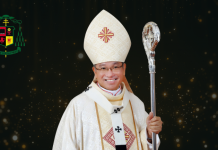
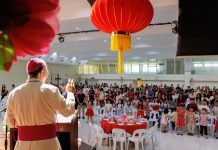
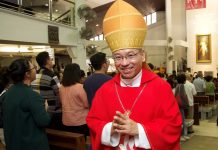
“Dialogue with culture alone is not enough. We need dialogue with all sections of society — with creation, the poor and the youth,” Archbishop Simon Poh of Kuching said in a keynote address at The Great Pilgrimage of Hope, which opened in Penang on Nov. 27.
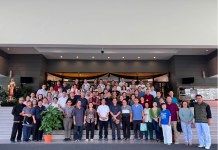
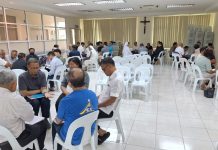
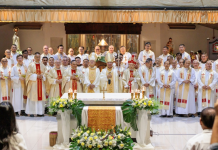
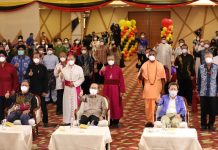
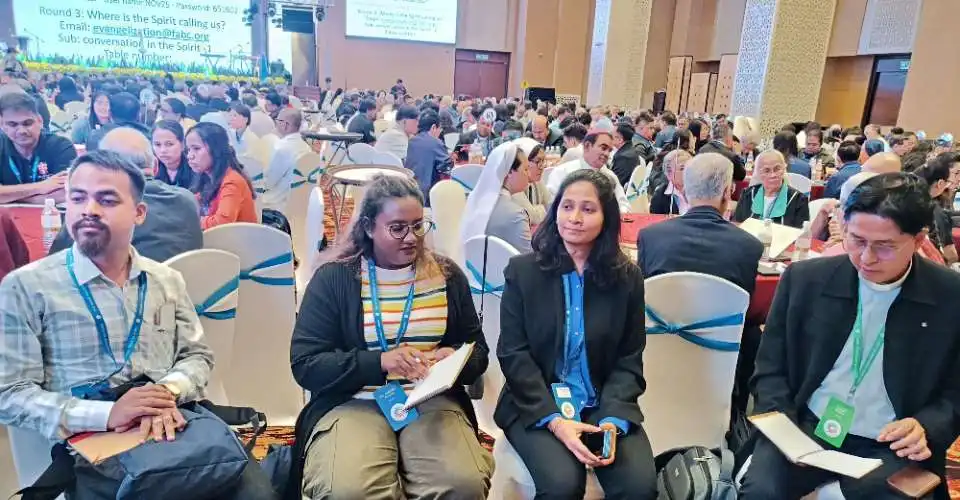
Around 800 delegates from 32 countries are attending the four-day meeting organized by the Federation of Asian Bishops’ Conferences Office of Evangelization (FABC-OE).
Poh said the Church’s synodal journey requires engagement with vulnerable and often overlooked communities, including the poor, technocrats, entrepreneurs, scientists, migrants, refugees, undocumented people, indigenous groups, victims of trafficking, people with disabilities, and those struggling with addiction or mental health conditions.
“They are the path of our synodal journey,” he said.
Asia is both the world’s most populous region and home to its largest number of poor people, but it is also a young continent, with some 60 percent of Asians under 30, Poh said, urging the Church to respond with renewed commitment to inclusive mission.
He highlighted the Bangkok Document, produced during FABC’s 50th anniversary assembly in Thailand last year, which identifies three priorities: deepening synodality, promoting the inculturation of evangelization, and strengthening family ministry across Asia.
“Dialogue is our tool for evangelization in Asia. It does not mean denying or compromising our Catholic faith,” he said. Effective dialogue, he added, rests on “mutual respect, openness, humility and acceptance.”
Poh also noted the document’s preference for describing other faiths as “neighboring religions.” “Once you consider someone a neighbor, you get closer to the person,” he said.
Explaining that the Greek roots of “synodality” — syn and hodos, meaning “walking together” — resonate deeply in Asia’s multireligious context, Poh said this inspired the FABC theme Journeying Together as Peoples of Asia, which is also the theme of the Penang gathering.
He said many Asian Churches have shifted from proclamation to “silent witness,” describing this as “whispering the Gospel.”
Citing the example of Saint Teresa of Kolkata, he said evangelization can occur through love and service, particularly in places where religious freedom is restricted.
Poh recalled that a co-worker once “whispered the Gospel” to his Buddhist mother, leading her to enroll him in a Catholic school and ultimately to his baptism at age 16.
“Befriending by our life and our actions — this is the first step,” he said.
Referencing the Second Vatican Council’s Nostra Aetate and Pope John Paul II’s Redemptoris Missio, he said the Gospel must take root in Asian cultures to shed perceptions of Christianity as “Western.”
“Inculturation makes us truly Asian Catholics,” he said, adding that locally grounded expressions of faith become “an effective instrument for proclaiming Jesus.”
He emphasized the centrality of family life in Asia, where “elders are respected, the culture of life is upheld, and women have their space even within patriarchal structures.”
He added that interfaith marriages can sometimes serve as “a good way of evangelization.”