





By Ivy Chai
“Journeying together as peoples of Asia … and they went a different way” (Mt 2:12)
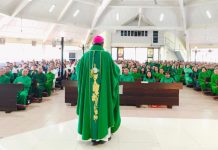
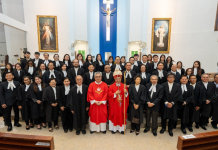
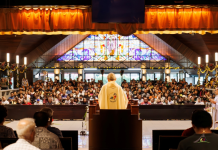
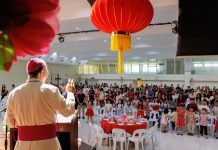
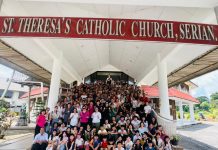
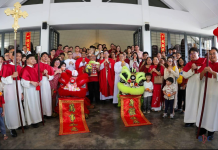
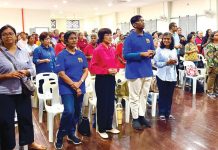
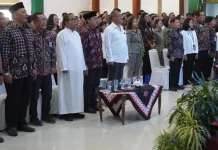
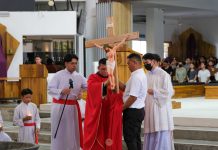
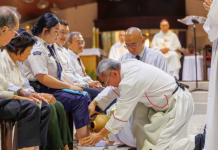
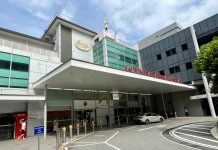
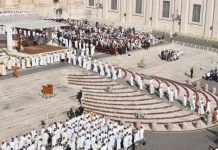
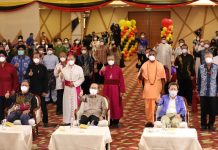
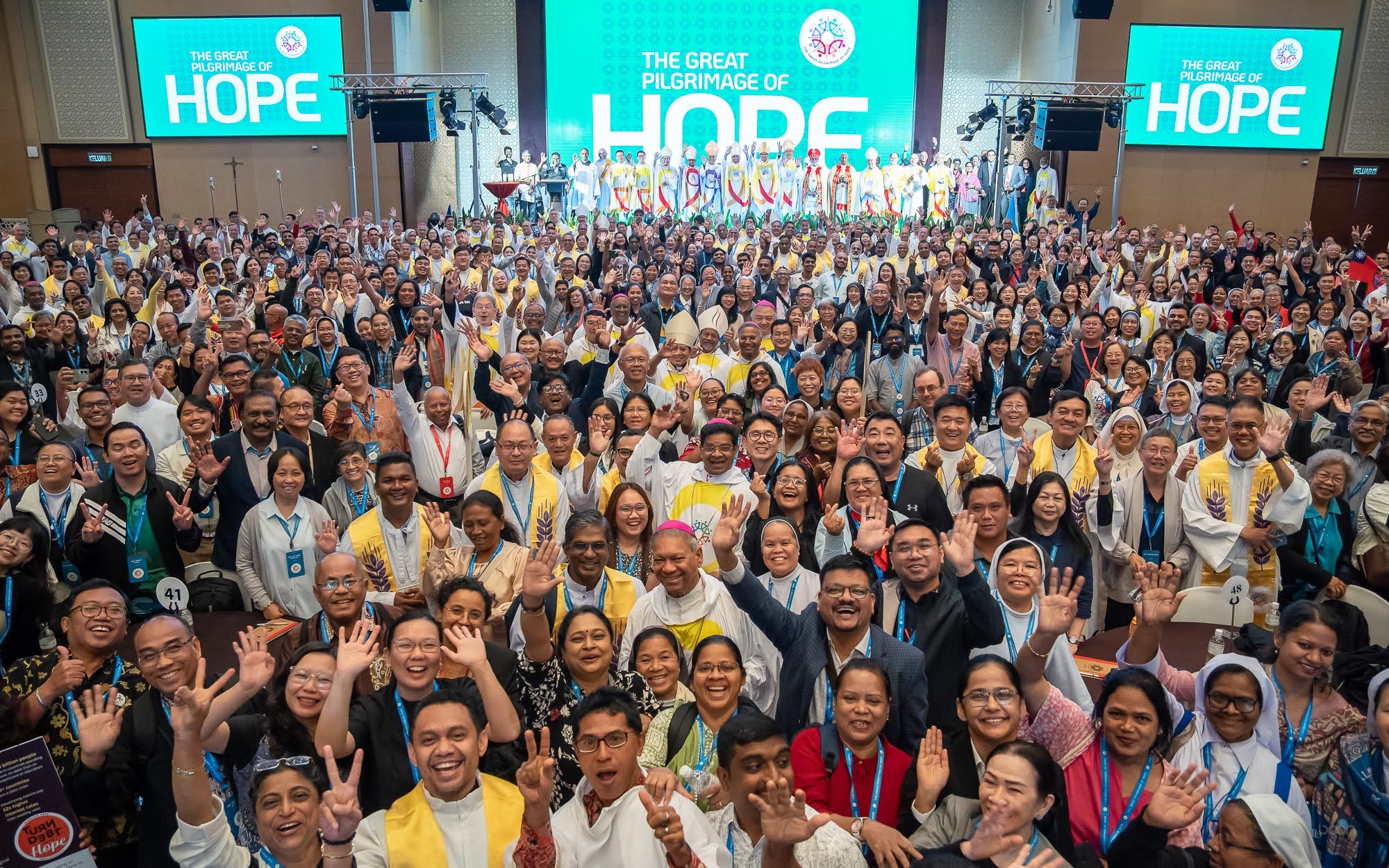
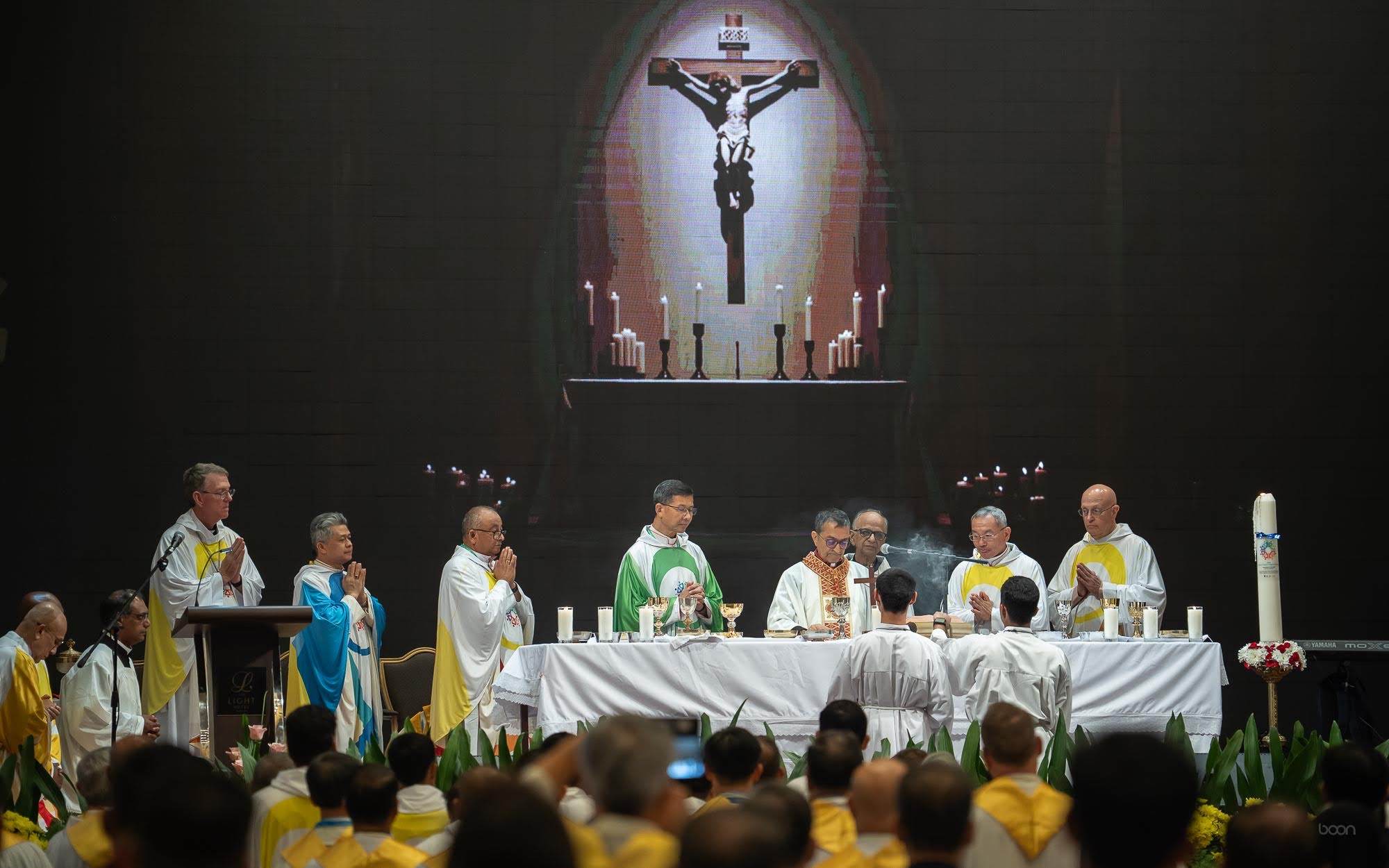
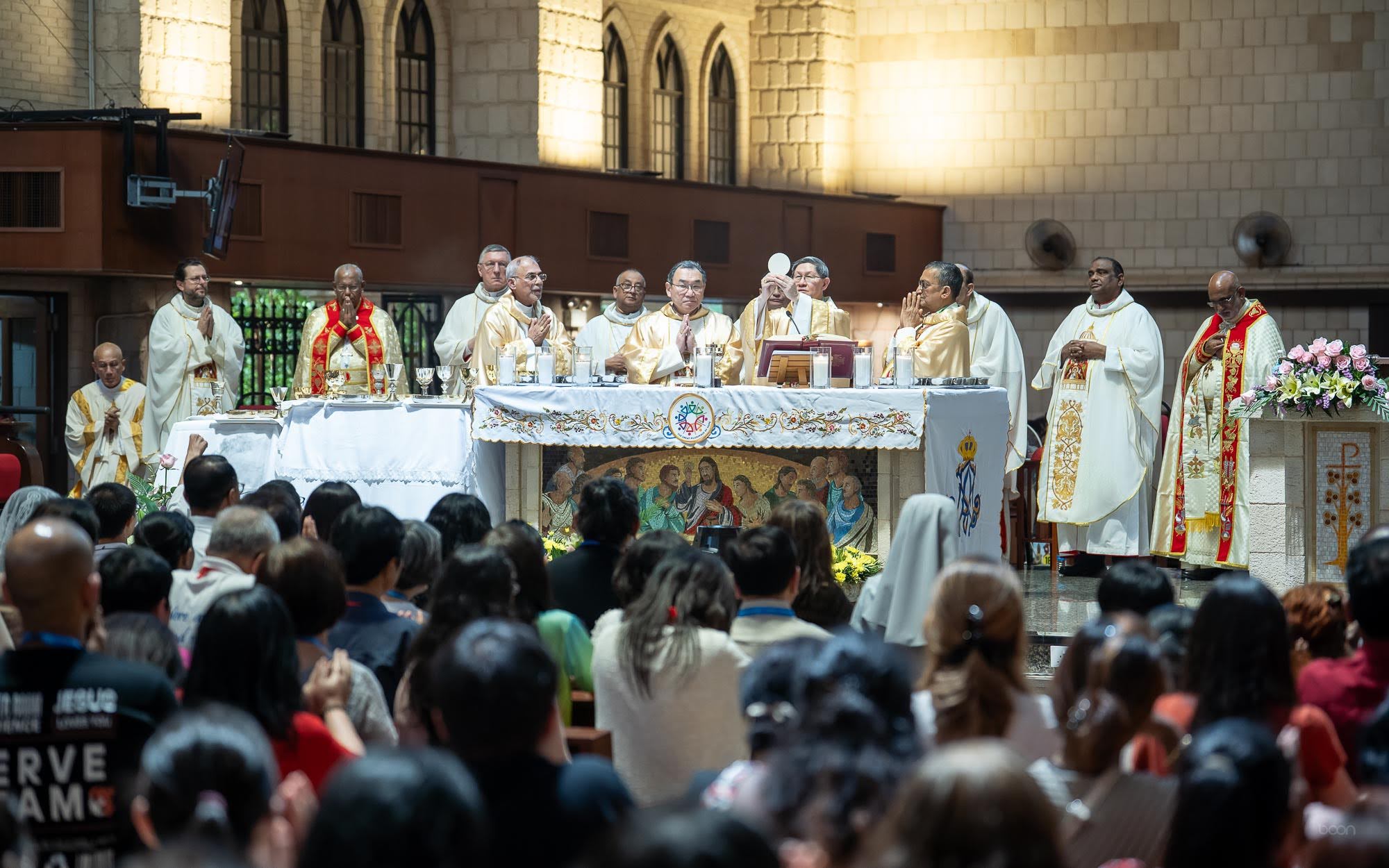
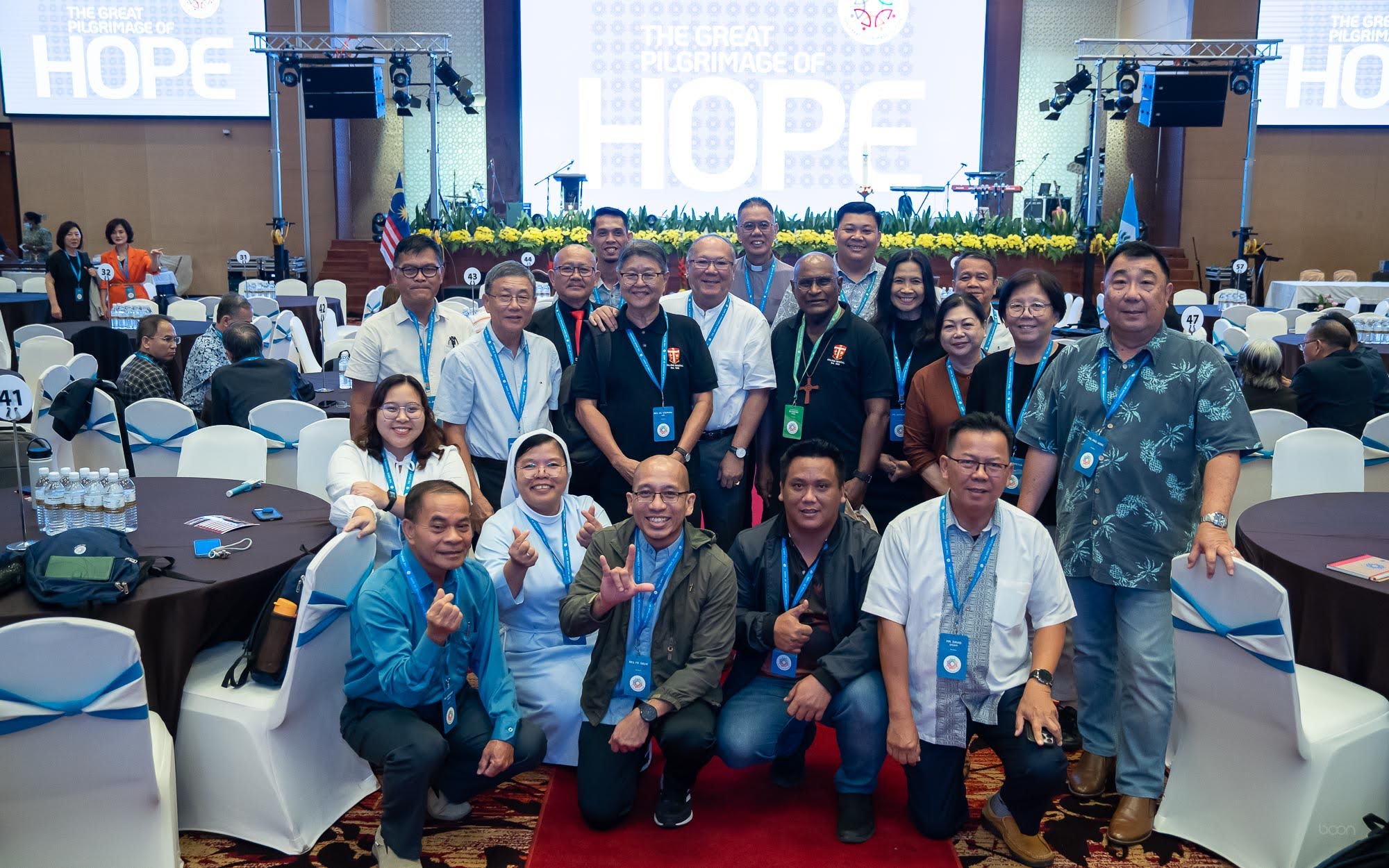
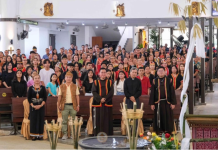
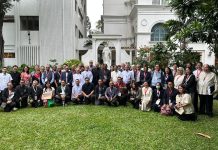
PENANG – The Great Pilgrimage of Hope organised by the Federation of Bishops’ Conferences Office of Evangelization (FABC OE) was held at the Light Hotel, Penang from 27-30 November 2025.
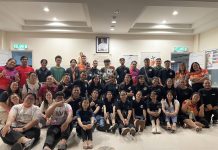
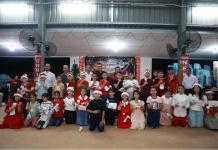
A total of 900 people from 32 countries attended the four-day congress, including 10 cardinals, 104 bishops, 155 priests, 74 nuns, 8 deacons, and 422 lay participants. There were 32 from the organising team and over 90 volunteers.
The experience was a spiritual journey filled with faith, hope, music, prayer, and a sense of community.
Journeying Together as Peoples of Asia
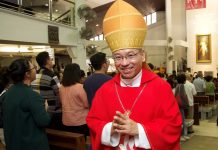
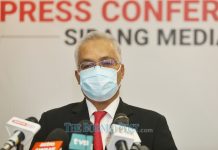
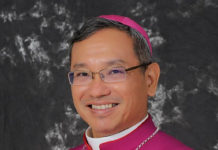
The keynote address on Journeying Together as Peoples of Asia was delivered on Day-2, 28 November by Archbishop Simon Poh, Archbishop of Kuching, Malaysia, President of Catholic Bishops’ Conference of Malaysia, Chairman designate for FABC OE.
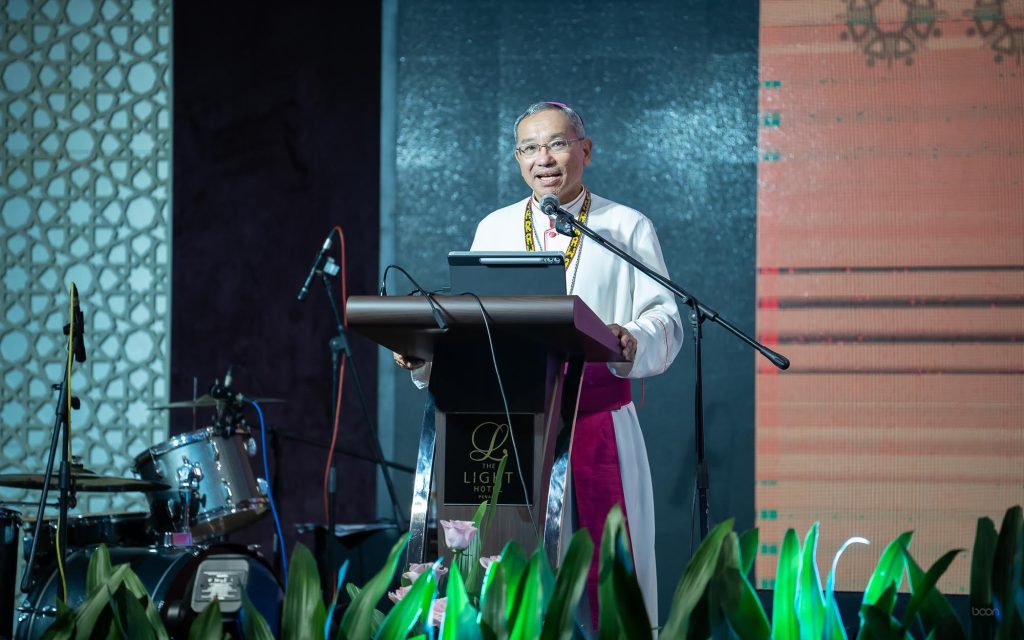
Archbishop Simon highlighted the FABC 50 Bangkok Document and reflected on Malaysia’s multicultural makeup: Chinese immigrants brought Buddhism from China, Indians introduced Hinduism from India, Malays embraced Islam through Arab traders, and most Indigenous people in East Malaysia are Catholics or Christians. This blend of cultures and faiths truly defines Malaysia as Asia – a nation of people “walking together for harmony in a land of multi-cultures and faiths.”
Archbishop Simon cited “Ecclesia in Asia”, the Apostolic Exhortation of Pope John Paul II, noting that Christians first planted the “cross” in Europe during the first millennium. The second millennium saw Christianity’s expansion into Africa and the Americas. In the current, third millennium, attention is focused on the Church’s presence in Asia – the NOW.
The Bangkok Document recounts the Magi travelling to find a newborn King in Israel. Journeying from the East symbolises Asia. After seeing him, they were filled with hope and “they went a different way” home, marking fresh directions for mission.
The Great Pilgrimage of Hope
The congress brought Catholics from the different communities in Asia to “journey together” to look and to discern what the Holy Spirit is saying to the Church in Asia, an Asia that can present “many diverse gifts to God.”
Archbishop Simon pointed out that using the synodal approach of See, Judge, Act, we ‘See’ the emerging Asian trends as reported in the FABC 50 Bangkok Document #30-65. In every crisis, there emerges an opportunity alongside danger.
Through interreligious and other dialogues, we ‘Judge’ by listening and discerning (spiritual conversation). Our mission through dialogue according to Redemptoris Missio #55-57 (1990), is to evangelise by glorifying Jesus by our deeds and lives, to make Jesus better known, recognised and loved.
Finally, to ‘Act’. Archbishop Simon elaborated on 11 points to undertake “new pathways that the Spirit has revealed to us in Asia.”
1. FABC: A journey from Dialogue to Synodality
The word ‘synodality’ comes from the Greek root ‘syn’ (together) and ‘hodos’ (way or journey). Combined, the root words mean ‘walking a path together’ or ‘journeying together’. Synodality calls for bishops, religious and lay faithful to walk together, listening, discerning, and moving forward together.
2. Inculturation for Evangelisation
The Church must stay true to the Gospel while engaging in cultural dialogue. Through inculturation, the Church makes the Gospel incarnate in different cultures and at the same time introduces peoples, together with their cultures, into her community.
3. Family ministry in Asia
Encourage families to live in mutual respect and harmony. Show consideration for elders; support interfaith marriages; help integrate migrants and reunite refugees; foster mentoring relationships across generations and give special attention to vulnerable groups such as senior citizens, those who are aged or infirm, people who are bereaved, sick, differently abled, or individuals and families facing crises.
4. Neighbouring Religions
FABC acknowledges that Asian Catholics of diverse cultures and religions live beside each other as neighbours. FABC 50 offers to the Catholic Church the term ‘Neighbouring Religions’, a paradigm shift from the way our Church relates and dialogues with Asian religions.
5. Silent witness as proclamation in Asia
For regions in Asia with limited religious freedom, living out the Gospel values through actions, compassion, and a commitment to justice and human dignity to demonstrate Christ’s love is recommended, compared to a direct approach.
6. Telling the story of Jesus in Asia
Narrating the story of Jesus Christ through story telling. The Gospel narrates the story of Jesus Christ. A meaningful mission keeps His story alive by fostering community, compassion, friendship, harmony, goodwill, and hope while serving as witnesses to Jesus and supporting one another.
7. Whisper the Gospel
In Asia, we must learn to witness and “whisper” the Gospel to one another. We should live our faith based on our personal encounters and experiences with Jesus. Whispering brings us close to others. In Asia, being good neighbours creates space for quietly sharing the Gospel. We are encouraged to form friendships, live out Christian values, and gently share our faith stories with those around us.
8. Education, Health & Human Development
The Church maintains a significant and visible role in education, which is central to its presence throughout the Asian continent. Through its missionaries, the Church contributes to development by establishing schools, hospitals, printing presses and universities. This process begins with the formation of individual consciences, followed by conversion and the progressive development of thought and behavioural patterns – summarised as Head, Heart, and Hands (Gospel Acclamation).
9. Care for Common Home and Indigenous Wisdom
Engaging with creation requires recognising our role as stewards rather than masters. Indigenous peoples across Asia have demonstrated sustainable living practices on their ancestral lands for generations. It is important to honour and learn from their knowledge. We should pursue ecological conversion through concrete actions addressing climate change.
10. Call for a decade of Evangelisation (2023-2033)
As the year 2033 draws near, marking 2,000 years since the Death and Resurrection of Jesus, as well as the founding of our one, holy, Catholic and apostolic Church and the Great Commissioning, we are prompted to consider: what gift will we offer to the Lord? We have eight years remaining to prepare for this anniversary celebrating both the foundation of the Catholic Church and Jesus Christ’s Death and Resurrection.
11. ASIA – Land of the Young
Sixty percent of young people reside in Asia. The region, particularly its developed areas, is experiencing a decline in birth rates. Young people face challenges such as unemployment, inequality, and limited access to education and healthcare in certain locations. Rural-to-urban migration and climate change pose additional threats to vulnerable and rural communities. In this context, Church and Family Ministry’s pro-life stance also involves supporting family, marriage, and children to benefit future generations of young Catholics.
You are the “NOW” of God
Archbishop Simon revealed that, according to FABC 50 Bangkok Document #71, the New Mission in Asia includes several priorities: accompanying migrants, refugees, and indigenous communities; focusing on family welfare; introducing new leadership opportunities for women within the Church; addressing gender-related matters; supporting youth ministries; promoting effective use of digital technology; encouraging an economy centred on inclusive growth amid urbanisation and globalisation; caring for our shared environment and serving as bridge builders, fostering dialogue and reconciliation.
Archbishop Simon Poh concluded his keynote address with the following quotes:
Pope Francis’ Evangelii Gaudium n.49: “I prefer a Church which is bruised, hurting and dirty because it has been out on the streets, rather than a Church which is unhealthy from being confined and from clinging to its own security. I do not want a Church concerned with being at the centre and which then ends by being caught up in a web of obsessions and procedures.”
1975 Evangelii Nutiandi #22: “There is no true evangelization if the name, the teaching, the life, the promises, the kingdom and the mystery of Jesus of Nazareth, the Son of God are not proclaimed.”
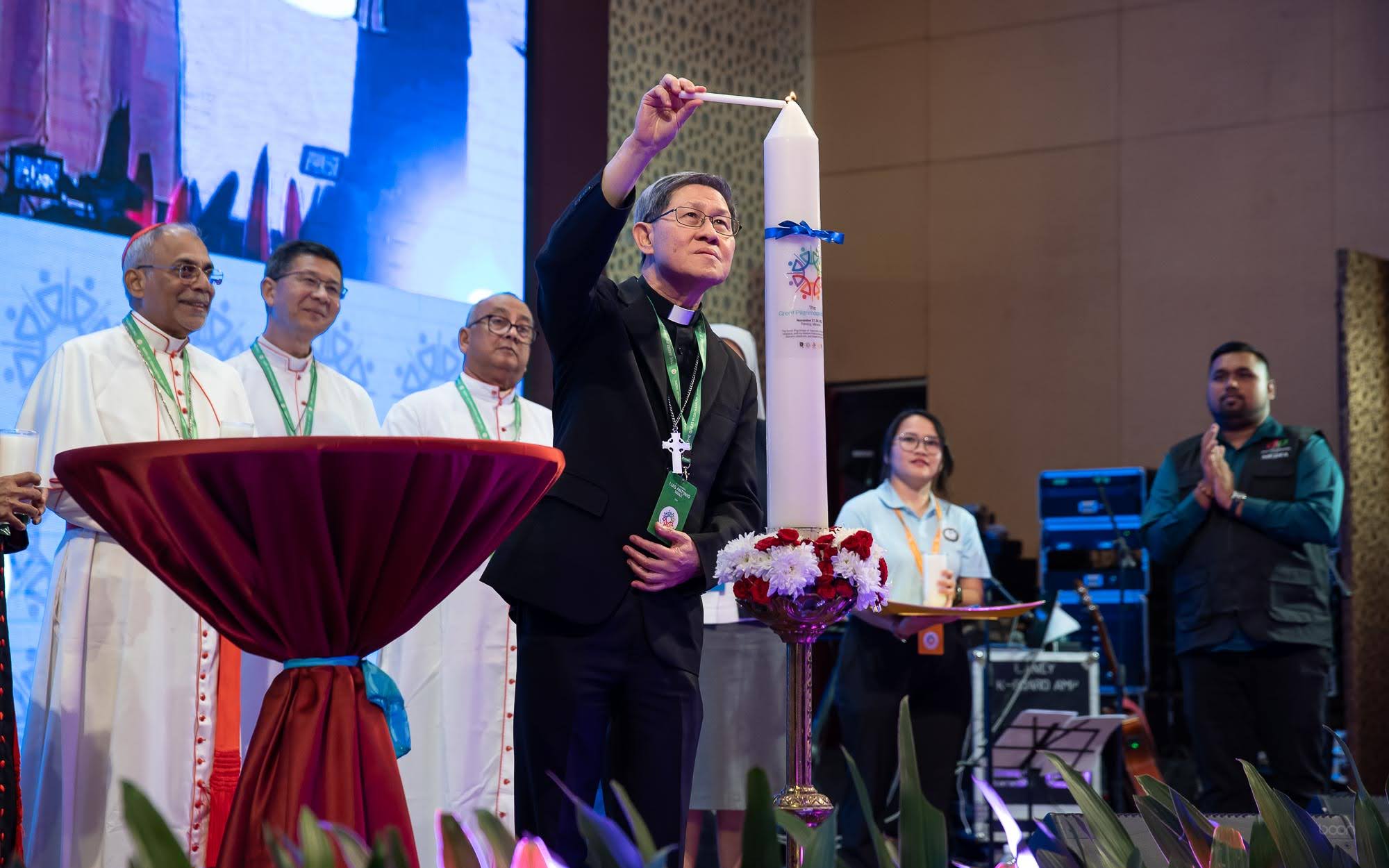

 was held at the Light Hotel, Penang from 27-30 November 2025.)