









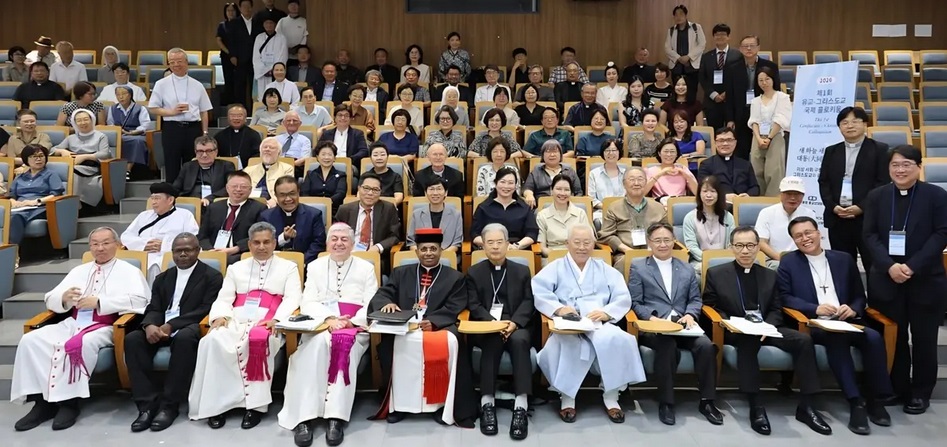
A major event in the history of Christian-Confucian relations took place in South Korea. AsiaNews’ editorial director, who was present at the meeting, reports on it. The religious dimension of Confucianism, the theme of friendship, and the discussion on democracy were among the most significant aspects of the meeting.
By Gianni Criveller
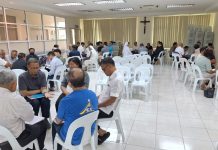
SEOUL — The First Christian-Confucian Colloquium was held in Seoul, South Korea, from 3 to 6 August. Two days were centred on discussions between religious figures and scholars from both sides, and two days were dedicated to visits to significant religious sites in the South Korean capital.
As AsiaNews reported on August 2, the colloquium was organised by the Holy See’s Dicastery for Interreligious Dialogue, in cooperation with the Catholic Bishops’ Conference of Korea, the Korean Confucian Academy, and Sogang University, where it took place.
I was invited to contribute, along with other religious leaders, scholars, delegates, and participants from a dozen countries, mostly from Asia.
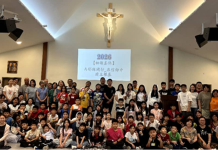
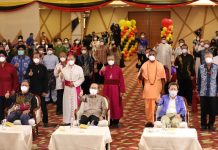
We were more than a hundred, and experienced moments of friendship and exchange that were truly meaningful and promising. This was, in fact, the first official initiative for dialogue between Catholicism and Confucianism.
I was struck by the fact that Confucianism was presented by numerous Confucian scholars and practitioners as a “religion”. This is far from a given. Certainly, the very notion of religion is not universally shared.
In any case, the question of whether Confucianism is a religion or not is hotly debated, and works on the subject fill many shelves. There are many who do not consider it a religion, but rather an ethical, social, or political philosophy.
In some Asian countries, including South Korea, which hosted the event, but also in Indonesia, Malaysia, Taiwan, and Hong Kong, Confucianism has public or national recognition as a religion.
Not so in China, where Confucianism is not included among the five official religions. However, Chinese authorities have been very effective and relentless in promoting Confucianism as the original core of Chinese national thought.
At the Seoul conference, the religious aspect of Confucianism was illustrated in its ritual dimensions, in the Confucian practice of inner development, and in the recognition of a social moral order that transcends the interests of individuals and families.
Seoul represents a real turning point because Confucianism had never before been included among the interlocutors of the Dicastery for Interreligious Dialogue.
The Vatican dicastery not only promoted this major event, but has also been developing a Guide to Dialogue with Confucianism for some time, which will soon be completed and published.
Christianity and Confucianism obviously have distinct theological foundations and philosophical visions, yet they share the value of friendship and a history of friendship.
Confucianism and Christianity have had opportunities for interaction and dialogue in the past, as evinced, for example, by the friendship and collaboration between the missionary Matteo Ricci and the Confucian scientist-statesman Paul Xu Guangqi in Ming Dynasty China (17th century).
The theme of friendship is extremely precious. As several speakers noted and in the ensuing debate, friendship is the fifth of the five relationships that constitute the Confucian social structure.
The first four relationships are emperor and subjects; father and son; older brother and younger brother; husband and wife.
If friendship is the fifth relationship, it is no less important; on the contrary, it is the only one based on personal choice and freedom of choice.
It is no coincidence that Matteo Ricci’s first book in China is dedicated to friendship, the anthropological meeting point between Christian humanism and Confucian thought.
Another significant sign of friendship between Christian faith and Confucian virtue comes, in the mid-20th century, from the Catholic intellectual John Wu Qingxiong, China’s first ambassador to the Holy See.
In his small masterpiece, The Science of Love, John Wu describes Saint Thérèse of Lisieux as a marvellous synthesis between the universal love that comes from the Gospel and Confucian benevolence.
The Seoul meeting was not just about ideas. The discussions addressed pressing contemporary challenges such as environmental degradation and threats to peace.
The focus on the theme of democracy was interesting. In Confucian thought, government must be for the good of the people, but not necessarily by the people, as only men of virtue can exercise power.
Democracy, which tends to be seen as a Western thing, does not guarantee the government of the virtuous.
On the Christian side, it was noted that democracy, according to the teachings of recent pontiffs, is the political system that best expresses the social doctrine of the Church for it recognises the equal dignity of all human beings, their right to participate in public affairs and to determine their own destiny.
Democracy is the fruit of freedom, an inalienable evangelical and universal value. If the achievements of democracy are imperfect, their alternatives offer no better solutions. The debate on this topic did not lead to a shared conclusion, but it was highly stimulating.
The choice of venue was also significant. In the 19th century, Korean authorities had reduced Neo-Confucianism to a nationalist ideology, giving rise to a tragic persecution of Christians, seen as a threat to the stability of the state. This painful experience is still commemorated today by the great devotion of Korean Catholics to their martyrs.
The Seoul meeting ended with a moving visit to the evocative Seosomun Shrine Museum, the site where thousands of Catholics (along with other political prisoners and common criminals) were martyred.
Times have changed today. South Korea is a vibrant democracy and has a significant and growing Christian presence. Many religious faiths, including Confucianism, exist today without conflict. Furthermore, South Korea’s dynamic and thriving Catholic community is already working to host World Youth Day in the summer of 2027.
This week’s Christian-Confucian Colloquium will have a follow-up. Two further meetings have been announced: in 2028 in Jakarta, Indonesia, and in 2030 in Hong Kong.
In the final appeal, published by the Dicastery for Interrreligious Dialogue, Christian and Confucian leaders promised to continue their cooperation in religious cultural dialogue for the purpose of building peace.
The historic, successful, and promising colloquium was attended by the President of the Korean Confucian Academy, Dr Seong-Su Choi, and numerous Confucian leaders and scholars from South Korea and other countries, including China, Indonesia, Hong Kong, Taiwan, Malaysia, and Singapore.
Participants from Japan had to cancel their trip due to the recent earthquake that hit their country.
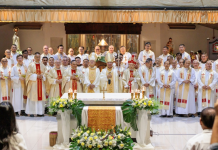
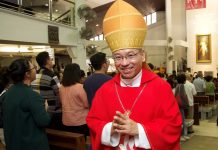
On the Catholic side, Cardinal George Jacob Koovakad, prefect of the Dicastery for Interreligious Dialogue was in attendance, as were Archbishop Giovanni Gaspari, Apostolic Nuncio to Korea and Mongolia; Bishop Mathias Ri Iong-hoon of Suwon, president of the Catholic Bishops’ Conference of Korea; and Archbishop Simon Poh of Kuching (Borneo, Malaysia), chairman of the Office of Evangelisation of the Federation of Asian Bishops’ Conferences (FABC).