










By Patricia Wong CK
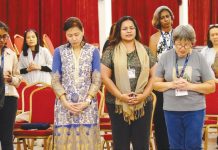
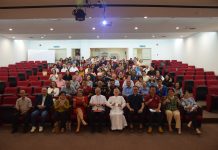
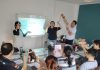
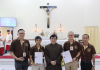
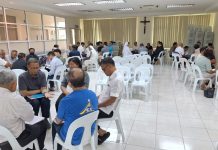
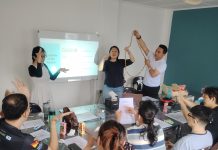
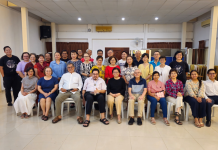
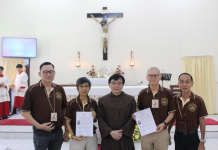
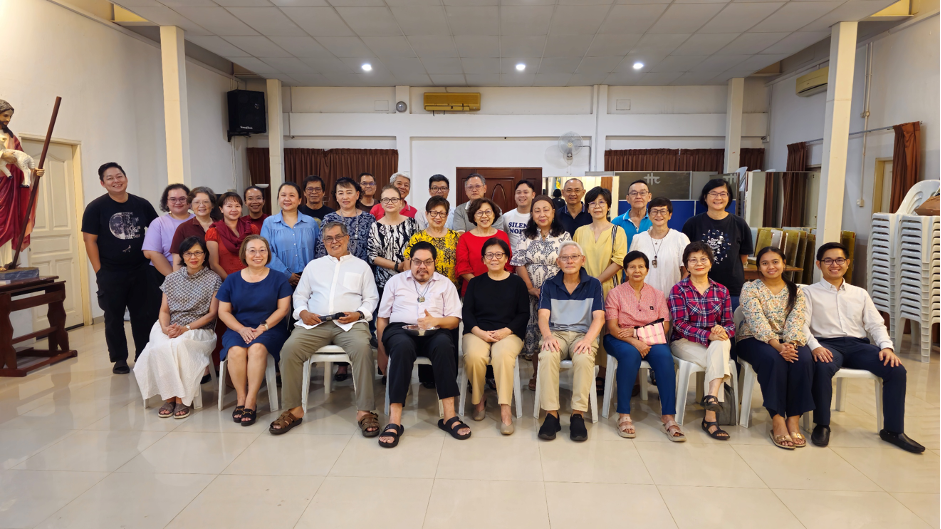
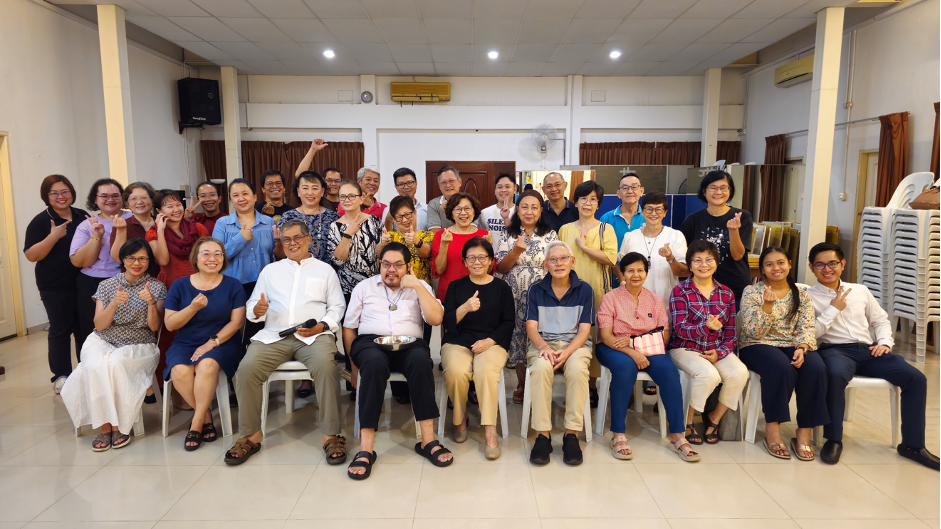
KUCHING — This course commenced on 11 March 2026 and ended with a potluck celebration on 7 October 2026. On Wednesdays from 7.30pm to 9.45pm, participants come after having read the allocated chapter(s) followed by group discussion of the questions from a workbook, then view a video presentation by Jeff Cavins in Good Shepherd Hall at Holy Trinity, Kenyalang. There were six groups of about 50 participants. The attendance however hovered around 60%.
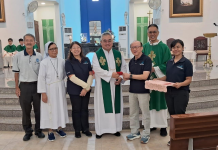
At the conclusion of the course, Fr Eugene Maglasang recounted his previous experiences of going from group to group listening to the views of the participants and getting to know them personally. He too learnt from the theological aspects behind Matthew’s take of Jesus, His miracles, teaching and parables.
Contents of the Course
The presenter, Jeff Cavins, connects God’s salvation plan for Jews and gentiles in Matthew’s Gospel in a 24-session Catholic-Bible-study programme. He relates how Jesus fulfils the promises of the Old Testament, as the true Davidic King, raises the bar of the mosaic law and establishes the Church as the New Covenant.
Using the spiritual senses – the allegorical, the moral and the anagogical meaning, Matthew wrote the life of Jesus as the fulfilment of the messianic prophecy, the new Adam who was fully human and divine, obedient and faithful son of God who has come to save all man. Matthew’s Gospel was written for the Jews but using references of the genealogy that included four gentile women, he showed that God’s plan of salvation also included the gentiles.
Jesus’ life is a recapitulation of the life of Israel. The 12 tribes of Israel of the old was now the 12 Apostles, the 40 years of wandering in the desert in preparation to enter the promised land was parallel to the 40 days of testing in the desert.
On the sermon on the mountain, He institutes the eight beatitudes that would raise the bar of the 10 Commandments of Moses. Jesus teaches that doing things for the Father in heaven in secret is more important than for outward appearances and that demands making choices and discretions.
Matthew 8 demonstrates Jesus’ power over sickness, sins, demons and nature. Then Matthew 9 emphasises the new covenant – it is the internal transformation rather than the external conformity that the scribes and pharisees adhere to- that is more important. Then Jesus commissions the 12 apostles and details their mission reminding them “not to be afraid” of their crosses to come. Then as the kingdom spreads the scribes and pharisees become jealous and plotted to kill him.
From then on, Jesus uses parables so that those who look may not see and those who hear may not understand for their hearts have become “dull.” The feeding of the 5000 and 4000 are recorded in Matthew 14 and 15 signifying that Jesus comes to feed the Jews as well as gentiles. After establishing his kingdom and making Peter the first vicar he prophesied his suffering and death to come. Then at the transfiguration, Peter, James and John witnessed Moses and Elijah talking to Jesus about His imminent suffering and death in Jerusalem.
In Matthew 18, Jesus teaches about humility, purity, family, justice and mercy while Chapter 19 is on marriage – in the context of the Jesus as the groom and the church his bride.
Chapter 20 – 21 relate Jesus as the servant King – obedient to the Father, giving his life for us – sinners, and we are to follow his examples because suffering is redemptive.
Antagonism between Jesus and the Sadducees, Scribes and Pharisees reaches its climax when they could not trap or catch Him when he used his rabbinic way of evading their traps in Matthew 22 – 23.
Jesus predicts the end of an era as he is about to begin a new covenant where only one sacrifice – Himself will be offered up in atonement for all our sins instead of the sacrifice of animals in the old Mosaic Law in Chapter 24 – 25.
Matthew 26 – 27, relate the betrayal of Judas, Peter’s denial, trial and the passion of Christ. Jesus “Son of the Father” became the sacrifice for Barrabas also “son of the father.”
Matthew concludes with the “triumph of the King”- Christ’s resurrection, He has conquered sin and death, opening the gates of heaven so that all believers can receive eternal life. Going to the hill in Galilee, Jesus commanded His disciples to go out to all peoples, baptize them in the name of the Father, the Son and the Holy Spirit and teach them to obey everything He has commanded them, that is, to spread the Good News!
Impacts of Encountering Matthew’s Christ
As I asked around, many participants revealed their ignorance of the allegorical, moral and anagogical meanings behind the systematic writing of St Matthew which organizes the life and teachings of Jesus in five discourses that mirrors the life of Israel in the five books of the Pentateuch – alternating between narrative blocks and then discourses.
Some relate their growth in understanding of the whole story of Jesus from birth, teaching, work, passion, death and resurrection in a chronological order unlike encountering only the Gospel readings at Mass and explanations during sermon.
There are those who had attended the course more than once. These have changed their attitude towards the meaning of Mass which is the sacramental renewal of the Christ’s once-for-all sacrifice on the cross. Receiving His body is food for life’s journey which makes them more like Him. Going to daily Mass has become a daily routine to gain strength, peace and joy on their pilgrimage on earth.
During the session discussions and video-viewing, many opinions, experiences and perspectives were put forward which were an eye-opening experience for those who were new. The Bible as we know it was translated from Hebrew, Greek and Aramaic. These languages are rich in cultures and traditions that stretched back more than two thousand years ago and some meaning may have been lost in translation. For instance, the number seven (7) in Hebrew means completeness, while 40 symbolizes trial, testing, purification and spiritual rebirth. So, the 40 years of the wanderings in the desert for the Israelites was just that. I could go on but these are just a few examples.
Conclusion
Knowing Matthew’s Gospel is an easier task than putting all the teachings into practice because now instead of the 10 commandments that emphasized all the ‘don’ts’ the sermon on the mountain raises the bar of the law into what lies inside of us. God looks at what transpires inside of us, our motives in giving, helping, our secret addictions and all other ugly habits, pride and greed. These are the giant challenges we need to overcome with the seven gifts of the Holy Spirit and the grace of God.
As I mingled around asking questions about how this course has impacted the participants, I imagined St Matthew looking down from heaven and counting the number of those who have read his gospel and saying, “I am glad my book has made a difference in your lives!”