










By UCANEWS
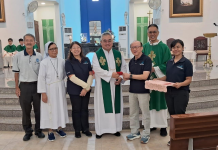
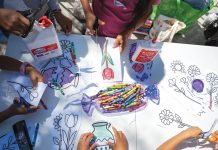
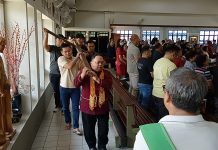
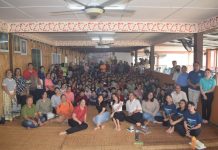
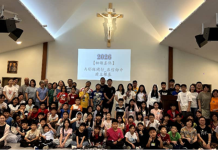
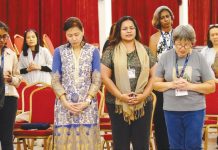
TAIPEI — Hundreds of Catholics, including clergy, religious and laypeople, braved bad weather to mark the 400th anniversary of the arrival of the first Catholic missionaries in Taiwan.
The celebration was held in Keelung, a northern port city and home to Taiwan’s earliest Catholic community, on Nov. 14, Asia News reported.
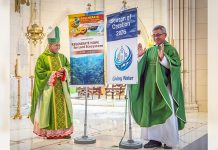
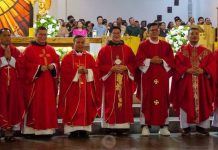
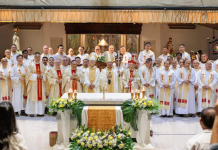
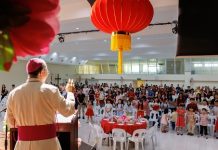
Archbishop Thomas Chung of Taipei presided over the celebration, which included a jubilee Mass held under a large marquee to shelter participants from heavy rain.
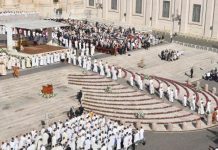
Among those attending were Bishop John Baptist Lee of Hsinchu, president of the Chinese Regional Bishops’ Conference; retired Archbishop Savio Hon Tai-Fai of Hong Kong, a former Vatican ambassador and secretary of the Dicastery for Evangelization of Peoples; and bishops from all of Taiwan’s dioceses.
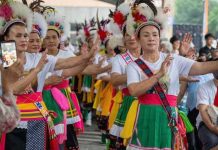
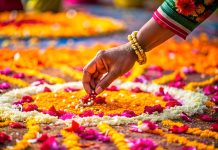
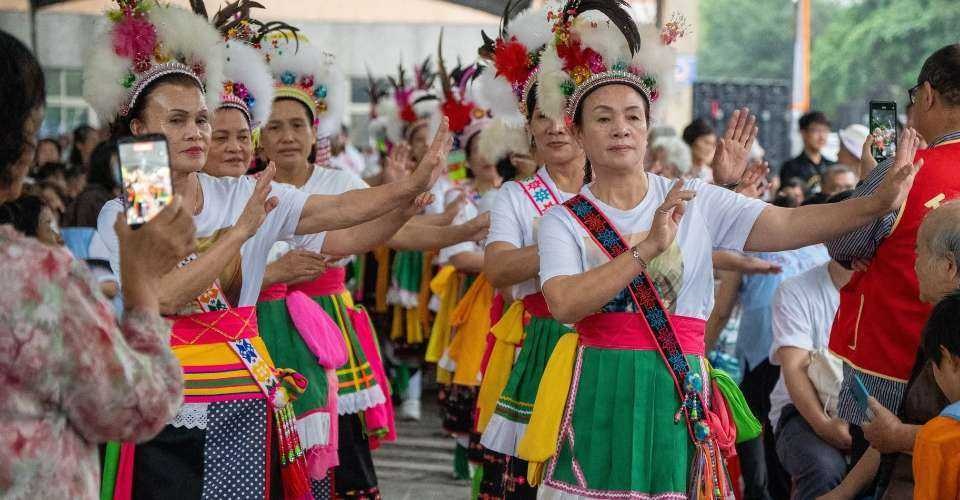
The celebration also featured songs and dances performed by members of indigenous Catholic communities in Keelung, who wore traditional costumes.
In his homily, Bishop Lee drew parallels between the Gospel account of the disciples on the road to Emmaus and the history of Catholicism in Taiwan.
Like the disciples, he said, the early Catholics had encountered Jesus but later forgotten him and failed to recognize him along the way.
“It was truly recognizing him as the Risen One that changed everything in their lives and made them witnesses to the Gospel,” he said.
“Let us return to the mission with the same ardent heart as theirs,” the bishop said.
Historic discovery
According to Church records, Spanish Dominican friars were the first Catholic missionaries to arrive on the island, then known as Formosa, in 1626.
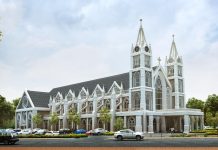
Between 2011 and 2019, archaeologists excavating Heping Island in Keelung unearthed the foundations of Todos los Santos (All Saints), a church built by Spanish Dominicans in the 17th century. The team concluded that the ruins belonged to the oldest Catholic church on the island.
The church was part of San Salvador, a settlement founded by Spanish conquistadors during their 16-year presence in northern Taiwan, from 1626 to 1642, according to Asia News.
Excavations at the church complex also uncovered the Cross of Caravaca, a large crucifix brought from Spain by the Dominican missionaries, as well as 21 sets of human remains. These included the remains of a European, probably a missionary, and urns containing the ashes of indigenous children from the Pingpu ethnic group.
The discoveries suggest that the church was not used solely by Spanish soldiers. They also point to an early proclamation of the Gospel among local communities by the Dominicans, who had arrived from the Philippines.
The Spanish presence was short-lived. In August 1642, Dutch forces attacked Keelung and captured Heping Island. During the conflict, the church was used as a detention center for Spanish prisoners before being converted to military use and eventually falling into ruin.
Catholicism would not be reestablished in Taiwan until 1859, some 217 years later, when another group of Dominican missionaries arrived and settled in the south of the island.
In the 1950s, thousands of Chinese people, including Catholics, fled mainland China for Taiwan following the communist takeover led by Mao Zedong.
Visit to the Dominicans in Rome
Earlier, on Nov. 11, Taiwanese Ambassador to the Holy See Anthony Ho and his wife, Anne Ho, paid a courtesy visit to the General Curia of the Order of Preachers, commonly known as the Dominicans, in Rome, according to a press release from the Taiwanese embassy.
During the visit, they met with the order’s master, Father Gerard Francisco Timoner III, and attended a luncheon at the Curia.
Timoner welcomed the guests and praised humanitarian initiatives jointly undertaken by Taiwan, the Holy See and Catholic religious orders under the H.O.P.E. Humanitarian Assistance Framework.
Ho expressed his appreciation for the deep friendship the Dominican Order has maintained with Taiwan over the past 400 years.
Timoner said Taiwan holds special significance in the order’s missionary history and noted that the two sides had maintained close ties over the years.
At the end of the meeting, Ho presented Timoner with a commemorative wooden carving titled “A Glimpse of Taiwan,” highlighting Keelung and Pingtung, two places that bear witness to the centuries-old ties of faith and friendship between the Dominican Order and Taiwan.